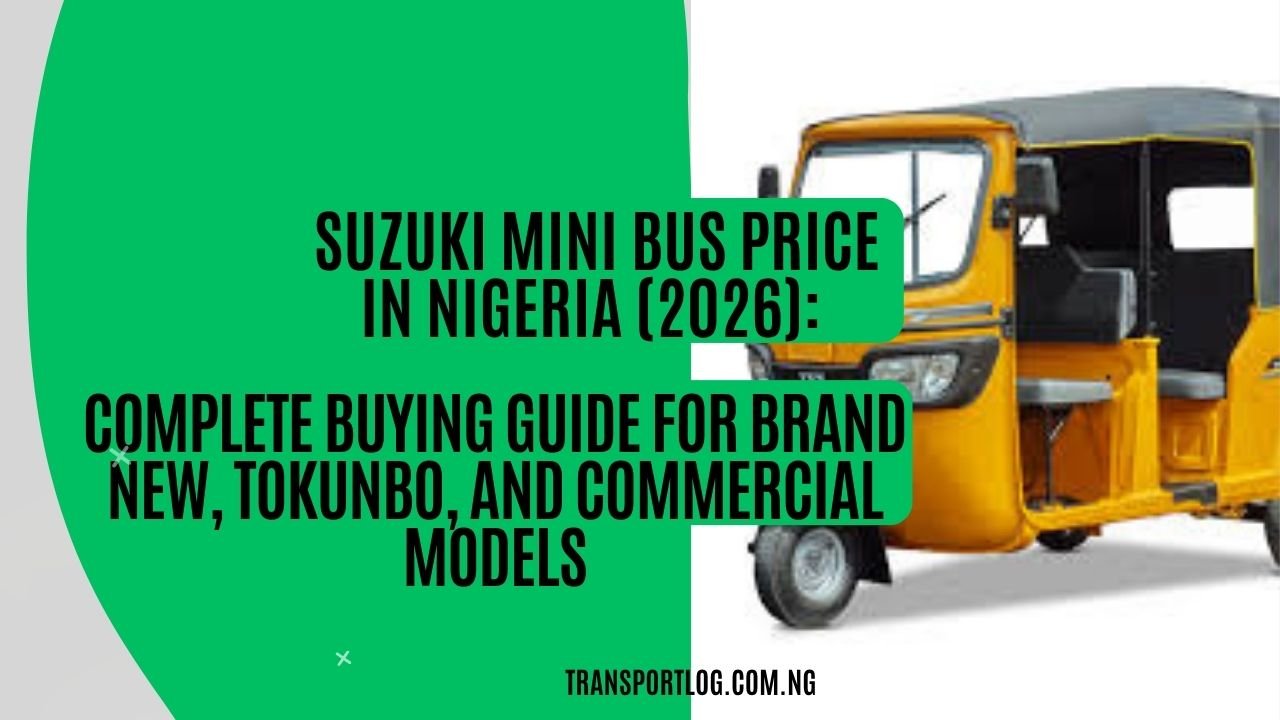
If you are a commercial transporter looking to expand your fleet, a private buyer searching for a reliable family vehicle, or an investor exploring the Nigerian passenger transport business, you already know that the Suzuki Mini Bus price in Nigeria (2026) is one of the most important factors in your buying decision.
The Suzuki Mini Bus has become one of the most popular choices for commercial transport operators across Nigeria — from Lagos danfo routes to interstate shuttle services in Abuja and Port Harcourt.
In 2026, the Suzuki Mini Bus market in Nigeria has shifted significantly due to naira devaluation, import duty adjustments, and changing consumer preferences.
Whether you are considering a brand new unit from an authorized dealer, a tokunbo (foreign used) model from the Lagos ports, or a fairly used Nigerian option, this comprehensive guide covers everything you need to know — current prices, specifications, running costs, financing options, and expert buying advice.
Why the Suzuki Mini Bus Is So Popular in Nigeria in 2026
Before diving into specific Suzuki Mini Bus prices in Nigeria, it is worth understanding why this particular vehicle has become a dominant force in the Nigerian commercial transport market.
Key Reasons for Suzuki Mini Bus Popularity in 2026
- Fuel Efficiency — Suzuki Mini Buses consistently deliver better fuel economy compared to competitors like Toyota Hiace, making them more profitable for commercial operators
- Affordable Entry Price — Even with 2026 price increases, Suzuki remains one of the most affordable mini bus options in Nigeria
- Spare Parts Availability — Suzuki parts are widely available across major Nigerian cities including Lagos, Onitsha, Aba, and Kano
- Durability on Nigerian Roads — The Suzuki Mini Bus is built to handle the challenging road conditions across Nigeria better than many competitors
- Low Maintenance Costs — Routine servicing costs are significantly lower than Toyota Hiace, Nissan Urvan, and other competitors
- Resale Value — Suzuki Mini Buses hold their value well in the Nigerian used car market, making them a smart investment
- Passenger Capacity — Most models comfortably seat 10–14 passengers, ideal for commercial route operations
- Government Registration Incentives — Some state governments offer reduced registration fees for commercial mini buses in 2026
💡 Expert Insight: In my experience working with commercial transport operators across Lagos and Abuja, the Suzuki Mini Bus consistently delivers the lowest cost-per-passenger-kilometer compared to any other mini bus in its class in Nigeria. This is why it has become the preferred vehicle for danfo and shuttle operators.
Suzuki Mini Bus Models Available in Nigeria 2026
The Suzuki Mini Bus comes in several variants in the Nigerian market. Here is a comprehensive breakdown of each model:
Suzuki Carry Mini Bus (Classic)
The Suzuki Carry is the most iconic and widely used Suzuki Mini Bus model in Nigeria. It has been the backbone of commercial transport in Lagos for decades.
| Specification | Details |
|---|---|
| Engine | 1.3L – 1.6L Petrol |
| Seating Capacity | 10–12 passengers |
| Fuel Type | Petrol |
| Transmission | Manual (5-speed) |
| Drive Type | Rear Wheel Drive |
| Fuel Tank Capacity | 40 Litres |
| Ground Clearance | 180mm |
| Typical Use | Danfo routes, shuttle services |
Suzuki APV Mini Bus
The Suzuki APV (All Purpose Vehicle) is a more modern and spacious alternative that has gained popularity in Nigeria over the last few years.
| Specification | Details |
|---|---|
| Engine | 1.5L – 1.6L Petrol |
| Seating Capacity | 8–10 passengers |
| Fuel Type | Petrol |
| Transmission | Manual (5-speed) |
| Drive Type | Rear Wheel Drive |
| Fuel Tank Capacity | 42 Litres |
| Ground Clearance | 170mm |
| Typical Use | Shuttle services, family transport |
Suzuki Every (Japanese Import)
The Suzuki Every is a Japanese Domestic Market (JDM) import that is commonly found in the tokunbo market in Nigeria. It is known for its compact size and excellent fuel economy.
| Specification | Details |
|---|---|
| Engine | 660cc – 1.0L Petrol |
| Seating Capacity | 4–8 passengers |
| Fuel Type | Petrol |
| Transmission | Manual or Automatic |
| Drive Type | 4WD or 2WD options |
| Fuel Tank Capacity | 35 Litres |
| Ground Clearance | 160mm |
| Typical Use | Private transport, small shuttle |
Suzuki Super Carry (Newer Model)
The Suzuki Super Carry is the updated version of the classic Carry with modern features and improved safety specifications.
| Specification | Details |
|---|---|
| Engine | 1.5L Petrol |
| Seating Capacity | 10–12 passengers |
| Fuel Type | Petrol |
| Transmission | Manual (5-speed) |
| Drive Type | Rear Wheel Drive |
| Fuel Tank Capacity | 43 Litres |
| Ground Clearance | 185mm |
| Typical Use | Commercial transport, shuttle |
Suzuki Mini Bus Price in Nigeria 2026: Complete Price Table
Here is the most comprehensive and up-to-date Suzuki Mini Bus price in Nigeria breakdown for 2026.
Brand New Suzuki Mini Bus Price in Nigeria 2026
Brand new Suzuki Mini Buses are available through authorized Suzuki dealers in Nigeria. These come with manufacturer warranty and full documentation.
| Model | 2026 Price (₦) | Dealer |
|---|---|---|
| Suzuki Carry 1.3L (Brand New) | ₦6,500,000 – ₦7,500,000 | Suzuki Nigeria, Lagos |
| Suzuki Carry 1.6L (Brand New) | ₦7,000,000 – ₦8,200,000 | Suzuki Nigeria, Lagos |
| Suzuki APV 1.5L (Brand New) | ₦8,500,000 – ₦10,000,000 | Suzuki Nigeria, Lagos |
| Suzuki Super Carry 1.5L (Brand New) | ₦7,500,000 – ₦9,000,000 | Suzuki Nigeria, Abuja |
⚠️ Important Note: Brand new Suzuki Mini Bus prices in Nigeria in 2026 are significantly higher than in 2024 due to naira devaluation and increased import duties. These prices are subject to change based on exchange rate fluctuations.
Tokunbo (Foreign Used) Suzuki Mini Bus Price in Nigeria 2026
Tokunbo Suzuki Mini Buses are imported from Japan, UAE, Europe, or other markets. They are significantly cheaper than brand new units but come with varying levels of condition.
| Model | Year Range | 2026 Price (₦) | Condition |
|---|---|---|---|
| Suzuki Carry 1.3L (Tokunbo) | 2015–2018 | ₦2,500,000 – ₦3,500,000 | Fair to Good |
| Suzuki Carry 1.6L (Tokunbo) | 2015–2019 | ₦3,000,000 – ₦4,000,000 | Fair to Good |
| Suzuki Carry 1.3L (Tokunbo) | 2019–2022 | ₦3,500,000 – ₦4,800,000 | Good to Very Good |
| Suzuki APV 1.5L (Tokunbo) | 2016–2020 | ₦4,000,000 – ₦5,500,000 | Fair to Good |
| Suzuki Every (Tokunbo) | 2015–2020 | ₦2,800,000 – ₦4,500,000 | Fair to Good |
| Suzuki Super Carry (Tokunbo) | 2018–2022 | ₦4,000,000 – ₦5,800,000 | Good to Very Good |
Nigerian Used (Fairly Used) Suzuki Mini Bus Price in Nigeria 2026
These are Suzuki Mini Buses that have been previously registered and used within Nigeria.
| Model | Year Range | 2026 Price (₦) | Condition |
|---|---|---|---|
| Suzuki Carry 1.3L (Nigeria Used) | 2010–2015 | ₦1,500,000 – ₦2,500,000 | Fair |
| Suzuki Carry 1.3L (Nigeria Used) | 2015–2018 | ₦2,000,000 – ₦3,200,000 | Good |
| Suzuki Carry 1.6L (Nigeria Used) | 2015–2018 | ₦2,500,000 – ₦3,800,000 | Good |
| Suzuki APV (Nigeria Used) | 2016–2020 | ₦3,000,000 – ₦5,000,000 | Fair to Good |
Suzuki Mini Bus Price by City in Nigeria 2026
Prices for Suzuki Mini Buses vary significantly across different Nigerian cities. Here is a city-by-city breakdown:
Lagos Suzuki Mini Bus Price 2026
Lagos has the largest Suzuki Mini Bus market in Nigeria with the widest selection and most competitive pricing.
| Model Type | Price Range (₦) |
|---|---|
| Brand New (from dealer) | ₦6,500,000 – ₦10,000,000 |
| Tokunbo (from ports/lots) | ₦2,500,000 – ₦5,800,000 |
| Nigerian Used | ₦1,500,000 – ₦5,000,000 |
Best places to buy in Lagos:
- Suzuki Nigeria Showroom, Ikeja
- Tokunbo car lots along Lagos-Badagry Expressway
- CMS and Apapa ports area for tokunbo imports
- Online platforms like Jiji, Cars45, and Autochek
Abuja Suzuki Mini Bus Price 2026
Abuja prices are typically 5–10% higher than Lagos due to transport costs and lower inventory volume.
| Model Type | Price Range (₦) |
|---|---|
| Brand New (from dealer) | ₦7,000,000 – ₦10,500,000 |
| Tokunbo | ₦2,800,000 – ₦6,000,000 |
| Nigerian Used | ₦1,800,000 – ₦5,200,000 |
Best places to buy in Abuja:
- Suzuki Nigeria Showroom, Wuse Zone 1
- Kubwa and Gwagwalada car markets
- Online platforms
Port Harcourt Suzuki Mini Bus Price 2026
Port Harcourt prices are generally similar to Lagos with slight variations based on availability.
| Model Type | Price Range (₦) |
|---|---|
| Brand New (from dealer) | ₦6,800,000 – ₦10,200,000 |
| Tokunbo | ₦2,600,000 – ₦5,900,000 |
| Nigerian Used | ₦1,600,000 – ₦5,100,000 |
Onitsha Suzuki Mini Bus Price 2026
Onitsha has one of the largest tokunbo vehicle markets in Nigeria and often offers competitive prices.
| Model Type | Price Range (₦) |
|---|---|
| Tokunbo | ₦2,400,000 – ₦5,500,000 |
| Nigerian Used | ₦1,400,000 – ₦4,800,000 |
Kano Suzuki Mini Bus Price 2026
| Model Type | Price Range (₦) |
|---|---|
| Tokunbo | ₦2,500,000 – ₦5,600,000 |
| Nigerian Used | ₦1,500,000 – ₦5,000,000 |
Suzuki Mini Bus vs Competitors: Price Comparison 2026
To help you make an informed decision, here is how the Suzuki Mini Bus price in Nigeria compares against its main competitors in 2026:
| Vehicle Model | Brand New Price (₦) | Tokunbo Price (₦) | Fuel Economy | Maintenance Cost |
|---|---|---|---|---|
| Suzuki Carry | ₦6.5M – ₦8.2M | ₦2.5M – ₦4.8M | ⭐⭐⭐⭐⭐ Excellent | ⭐⭐⭐⭐⭐ Low |
| Toyota Hiace | ₦12M – ₦18M | ₦4M – ₦10M | ⭐⭐⭐ Good | ⭐⭐⭐ Medium |
| Nissan Urvan | ₦10M – ₦15M | ₦3.5M – ₦8M | ⭐⭐⭐ Good | ⭐⭐⭐ Medium |
| Mitsubishi L300 | ₦8M – ₦12M | ₦3M – ₦6M | ⭐⭐⭐⭐ Very Good | ⭐⭐⭐⭐ Low-Medium |
| Hyundai H1 | ₦14M – ₦20M | ₦5M – ₦12M | ⭐⭐⭐ Good | ⭐⭐ Medium-High |
💡 Expert Verdict: The Suzuki Mini Bus offers the best value-for-money proposition in the Nigerian mini bus market in 2026. It is significantly cheaper than the Toyota Hiace while delivering comparable or better fuel economy. For commercial operators, the lower initial investment combined with lower running costs makes the Suzuki Carry the most profitable choice.
Total Cost of Ownership: Suzuki Mini Bus in Nigeria 2026
Beyond the purchase price, understanding the total cost of ownership is critical for making a smart buying decision. Here is a detailed breakdown of what it costs to own and operate a Suzuki Mini Bus in Nigeria in 2026.
Annual Running Costs for Suzuki Carry 1.3L
| Expense Item | Estimated Annual Cost (₦) |
|---|---|
| Fuel (daily commercial use, ~100km/day) | ₦1,200,000 – ₦1,800,000 |
| Routine Servicing (every 5,000km) | ₦150,000 – ₦250,000 |
| Tyres (set of 4, once per year) | ₦120,000 – ₦200,000 |
| Insurance (Third Party) | ₦80,000 – ₦150,000 |
| Insurance (Comprehensive) | ₦200,000 – ₦400,000 |
| Road Worthiness & Vehicle License | ₦25,000 – ₦50,000 |
| Spare Parts & Repairs (average) | ₦100,000 – ₦300,000 |
| Driver Salary (if employed) | ₦600,000 – ₦1,200,000 |
Estimated Annual Total Cost of Ownership
| Usage Type | Estimated Annual Cost (₦) |
|---|---|
| Private/Family Use | ₦500,000 – ₦1,200,000 |
| Commercial (daily operation) | ₦2,500,000 – ₦4,500,000 |
💡 Expert Tip: The Suzuki Mini Bus typically delivers a return on investment (ROI) within 12–18 months for commercial operators running on busy Lagos or Abuja routes. This is significantly faster than the Toyota Hiace which takes 18–24 months due to higher initial purchase price.
Fuel Consumption: Suzuki Mini Bus in Nigeria 2026
Fuel economy is one of the biggest advantages of the Suzuki Mini Bus. Here are the real-world fuel consumption figures based on Nigerian driving conditions:
| Model | City Driving (km/litre) | Highway Driving (km/litre) | Combined (km/litre) |
|---|---|---|---|
| Suzuki Carry 1.3L | 12–14 km/l | 15–18 km/l | 13–16 km/l |
| Suzuki Carry 1.6L | 10–12 km/l | 13–16 km/l | 11–14 km/l |
| Suzuki APV 1.5L | 11–13 km/l | 14–17 km/l | 12–15 km/l |
Suzuki Mini Bus Maintenance Cost in Nigeria 2026
One of the most frequently asked questions from potential buyers is: “How much does it cost to maintain a Suzuki Mini Bus in Nigeria?”
Here is a detailed, honest breakdown of routine and major maintenance costs in 2026:
Routine Maintenance Schedule and Costs
| Service Type | Interval | 2026 Estimated Cost (₦) |
|---|---|---|
| Engine Oil Change (synthetic) | Every 5,000km | ₦15,000 – ₦25,000 |
| Engine Oil Change (semi-synthetic) | Every 5,000km | ₦10,000 – ₦18,000 |
| Oil Filter Replacement | Every 5,000km | ₦3,000 – ₦6,000 |
| Air Filter Replacement | Every 10,000km | ₦5,000 – ₦10,000 |
| Spark Plugs Replacement | Every 20,000km | ₦8,000 – ₦15,000 |
| Brake Pads (front) | Every 30,000km | ₦12,000 – ₦20,000 |
| Brake Pads (rear) | Every 40,000km | ₦10,000 – ₦18,000 |
| Timing Belt Replacement | Every 60,000km | ₦25,000 – ₦45,000 |
| Gearbox Oil Change | Every 40,000km | ₦8,000 – ₦15,000 |
| Coolant Flush | Every 40,000km | ₦5,000 – ₦10,000 |
| Full Service (comprehensive) | Every 20,000km | ₦35,000 – ₦65,000 |
Common Repair Costs for Suzuki Mini Bus in Nigeria 2026
| Repair Type | 2026 Estimated Cost (₦) |
|---|---|
| Clutch Replacement | ₦35,000 – ₦65,000 |
| Alternator Replacement | ₦25,000 – ₦50,000 |
| Starter Motor Replacement | ₦20,000 – ₦40,000 |
| Radiator Replacement | ₦30,000 – ₦55,000 |
| Suspension Overhaul | ₦40,000 – ₦80,000 |
| Gear Box Overhaul | ₦60,000 – ₦120,000 |
| Engine Overhaul | ₦150,000 – ₦300,000 |
| Exhaust System Replacement | ₦20,000 – ₦45,000 |
| Battery Replacement | ₦35,000 – ₦65,000 |
| Windshield Replacement | ₦25,000 – ₦50,000 |
💡 Expert Tip: To significantly reduce your Suzuki Mini Bus maintenance costs in Nigeria, always use genuine Suzuki spare parts sourced from authorized dealers or trusted importers. Counterfeit parts are widely sold in Nigerian markets and can cause serious engine and mechanical damage that ends up costing far more in the long run.
⚠️ Warning: Avoid using substandard engine oil in your Suzuki Mini Bus. In 2026, with Nigerian roads being as demanding as they are, engine oil quality directly determines how long your engine lasts. Always use the manufacturer-recommended grade.
Where to Buy Suzuki Mini Bus in Nigeria 2026
Knowing where to buy is just as important as knowing the price. Here are the most trusted and recommended channels for purchasing a Suzuki Mini Bus in Nigeria in 2026:
1. Authorized Suzuki Dealers in Nigeria
Buying from an authorized dealer guarantees authenticity, manufacturer warranty, and proper documentation.
| Dealer Name | Location | Contact |
|---|---|---|
| Suzuki Nigeria Limited | Ikeja, Lagos | Visit official website for current contact |
| Suzuki Nigeria (Abuja Branch) | Wuse Zone 1, Abuja | Visit official website for current contact |
| Associated Suzuki Dealers | Port Harcourt | Contact through Suzuki Nigeria website |
💡 Expert Tip: Always insist on seeing the vehicle’s duty payment receipts, customs clearance documents, and manufacturer warranty card when buying from any dealer in Nigeria. This protects you legally and financially.
2. Reputable Tokunbo Car Dealers
For tokunbo Suzuki Mini Buses, these are the most trusted markets in Nigeria in 2026:
Lagos:
- Trade Fair Complex, Lagos
- Apapa car yards and port clearing agents
- Berger vehicle market, Ojota
- Lagos-Badagry Expressway car lots
Abuja:
- Kubwa auto market
- Dei Dei auto spare parts and vehicle market
- Gwagwalada vehicle market
Port Harcourt:
- Rumuola car market
- Mile 3 vehicle market
Onitsha:
- Onitsha head bridge car market
- Upper Iweka vehicle market
Kano:
- Kasuwan Barci vehicle market
- Kofar Wambai auto market
3. Online Platforms for Suzuki Mini Bus in Nigeria 2026
Digital car marketplaces have become increasingly reliable for vehicle purchases in Nigeria. Here are the most trusted platforms:
| Platform | Advantage | Website |
|---|---|---|
| Jiji.ng | Largest listings, direct seller contact | jiji.ng |
| Cars45 | Verified vehicles, inspection reports | cars45.com |
| Autochek | Financing options, certified vehicles | autochek.africa |
| Cheki Nigeria | Wide selection, dealer listings | cheki.com.ng |
| TokunboVehicles.ng | Specializes in tokunbo imports | tokunbovehicles.ng |
⚠️ Online Buying Warning: In 2026, vehicle scams on Nigerian online platforms remain a serious issue. Never pay full payment for a vehicle you have not physically inspected. Always use an independent mechanic to inspect any tokunbo or Nigerian used Suzuki Mini Bus before completing payment. Platforms like Cars45 and Autochek offer professional inspection services.
Suzuki Mini Bus Financing Options in Nigeria 2026
Not everyone can pay outright for a Suzuki Mini Bus. Here are the financing options available to Nigerian buyers in 2026:
Check the Transport Fare in Nigeria 2026
Bank Auto Loans
Several Nigerian banks offer vehicle financing for commercial mini buses in 2026:
| Bank | Loan Type | Interest Rate (Approx.) | Tenure |
|---|---|---|---|
| Access Bank | Auto Loan | 22–28% per annum | 12–48 months |
| GTBank | Vehicle Finance | 22–27% per annum | 12–36 months |
| First Bank | Auto Finance | 23–28% per annum | 12–48 months |
| UBA | Vehicle Loan | 22–27% per annum | 12–36 months |
| Zenith Bank | Auto Loan | 22–28% per annum | 12–48 months |
💡 Expert Tip: Bank interest rates in Nigeria in 2026 remain high due to monetary policy tightening. Before taking a bank auto loan for your Suzuki Mini Bus, calculate the total repayment carefully. On a ₦5,000,000 loan at 25% per annum over 24 months, you could end up repaying approximately ₦7,500,000 – ₦8,000,000 in total.
Dealer Financing
Some authorized Suzuki dealers and large tokunbo car lots offer in-house financing arrangements in 2026:
- Down payment: Typically 30–40% of vehicle price
- Balance: Spread over 6–24 months
- Interest: Varies by dealer (15–25% typically)
Government and State Transport Schemes
In 2026, some Nigerian state governments have commercial vehicle loan schemes specifically designed for transport operators:
- Lagos State LSETF (Lagos State Employment Trust Fund) — Offers loans to commercial transport operators at subsidized rates
- CBN Intervention Funds — The Central Bank of Nigeria periodically releases transport sector intervention funds through commercial banks
- BOI (Bank of Industry) — Offers equipment and vehicle financing for small and medium transport businesses
💡 Expert Tip: The Bank of Industry (BOI) transport financing scheme typically offers significantly lower interest rates (around 9–15% per annum) compared to commercial bank auto loans. Check the BOI website for eligibility requirements and current application windows in 2026.
Pros and Cons of Buying a Suzuki Mini Bus in Nigeria 2026
✅ Pros
- Affordable purchase price compared to Toyota Hiace and Nissan Urvan
- Excellent fuel economy — saves operators significant money daily
- Wide availability of spare parts across Nigerian cities
- Low routine maintenance costs compared to competitors
- Good resale value in the Nigerian used vehicle market
- Ideal size for Lagos, Abuja, and other city commercial routes
- Proven durability on Nigerian roads over many decades
- Strong commercial ROI — typically recoups investment within 12–18 months
❌ Cons
- Smaller capacity than Toyota Hiace (10–12 seats vs 14–18 seats)
- Less prestige — some operators and passengers prefer larger buses
- Limited brand new availability — authorized dealers sometimes have stock shortages
- Older models may have outdated safety features
- Rising prices in 2026 due to naira devaluation making even tokunbo units more expensive
- Limited air conditioning options on older Carry models
- Susceptible to flooding damage on lower ground clearance variants
How to Inspect a Suzuki Mini Bus Before Buying in Nigeria 2026
Whether you are buying brand new, tokunbo, or Nigerian used, here is a professional inspection checklist every buyer must follow:
🔍 Pre-Purchase Inspection Checklist
Engine and Mechanical:
- ✅ Check engine for oil leaks, unusual smoke, and strange sounds
- ✅ Inspect the timing belt condition (critical — replace immediately if worn)
- ✅ Check coolant level and color (brown coolant indicates engine problems)
- ✅ Test all gears for smooth engagement
- ✅ Check clutch biting point (high biting point = worn clutch)
- ✅ Inspect exhaust smoke color (blue smoke = oil burning, white smoke = head gasket issues)
Body and Chassis:
- ✅ Check for rust especially under the chassis and wheel arches
- ✅ Inspect all body panels for accident damage or filler repairs
- ✅ Check door alignment — misaligned doors indicate chassis damage
- ✅ Test all windows for proper opening and closing
- ✅ Inspect the roof for dents or rust damage
Electrical Systems:
- ✅ Test all lights (headlights, tail lights, indicators, brake lights)
- ✅ Check dashboard warning lights on startup
- ✅ Test the alternator charging (use a multimeter — should read 13.5–14.5V when running)
- ✅ Test the air conditioning if fitted
- ✅ Check all seat belts for proper function
Interior and Passenger Area:
- ✅ Inspect seat condition for tears, damage, or missing components
- ✅ Check floor for rust or water damage
- ✅ Test all door locks from inside and outside
- ✅ Verify seating capacity matches vehicle registration documents
Documentation:
- ✅ Verify the vehicle’s VIN (chassis number) matches all documents
- ✅ Confirm customs duty payment receipts for tokunbo vehicles
- ✅ Check for any outstanding fines or encumbrances
- ✅ Verify the seller’s identity matches ownership documents
💡 Expert Recommendation: Always hire an independent, qualified mechanic to inspect any Suzuki Mini Bus before purchase. A professional inspection in Nigeria costs between ₦5,000 and ₦15,000 but can save you from spending millions on repairs after a bad purchase.
Suzuki Mini Bus Registration and Documentation in Nigeria 2026
After purchasing your Suzuki Mini Bus, here are the registration and documentation requirements and costs:
Registration Costs for Commercial Mini Bus in Nigeria 2026
| Item | Estimated Cost (₦) |
|---|---|
| FRSC Vehicle Registration | ₦20,000 – ₦40,000 |
| Number Plates | ₦15,000 – ₦25,000 |
| Road Worthiness Certificate | ₦10,000 – ₦20,000 |
| State Transport Permit | ₦10,000 – ₦30,000 |
| Hackney Permit (commercial) | ₦15,000 – ₦35,000 |
| Third Party Insurance | ₦80,000 – ₦150,000 |
| Comprehensive Insurance | ₦200,000 – ₦400,000 |
| Vehicle License (annual) | ₦10,000 – ₦25,000 |
⚠️ Important: Operating a commercial mini bus in Nigeria without proper registration, hackney permit, and valid insurance is illegal and can result in vehicle seizure, fines, and legal prosecution. Always ensure full compliance with FRSC and state transport authority requirements.
Tips for Getting the Best Deal on Suzuki Mini Bus in Nigeria 2026
Here are expert negotiation and buying strategies to ensure you get the best possible price:
💰 Expert Buying Tips for 2026
- Buy at year end — December to January is often the best time to negotiate as dealers push to clear inventory before the new year
- Buy directly from importers — Cutting out middlemen by dealing directly with clearing agents at Lagos ports can save you ₦200,000 – ₦500,000
- Negotiate comprehensively — Always negotiate the total package including free servicing, extra tyres, or extended warranty rather than just the price
- Check multiple dealers — Get at least 3 price quotes from different dealers before committing to any purchase
- Leverage online competition — Use Jiji and Cheki listings as price benchmarks when negotiating with physical dealers
- Inspect before deposit — Never pay any deposit before physically inspecting the vehicle and verifying all documents
- Avoid festive season buying — Vehicle prices tend to be higher between November and January due to increased demand
- Consider slightly older tokunbo models — A 2018 or 2019 tokunbo Suzuki Carry in excellent condition often offers far better value than a 2021–2022 model at a significantly higher price
Suzuki Mini Bus for Commercial Transport Business in Nigeria 2026
If you are buying a Suzuki Mini Bus specifically for commercial transport purposes in Nigeria, here is what you need to know to run a profitable operation in 2026:
Revenue Potential for Suzuki Mini Bus Operators 2026
| Route Type | Daily Passengers | Average Fare Per Passenger | Estimated Daily Revenue |
|---|---|---|---|
| Short city route (Lagos) | 80–120 passengers | ₦200 – ₦400 | ₦16,000 – ₦48,000 |
| Medium city route | 60–100 passengers | ₦300 – ₦600 | ₦18,000 – ₦60,000 |
| Shuttle service (corporate) | 20–40 passengers | ₦500 – ₦1,500 | ₦10,000 – ₦60,000 |
| School transport | 15–25 students | ₦5,000 – ₦15,000/month | ₦75,000 – ₦375,000/month |
Monthly Profit Estimate for a Commercial Suzuki Carry Operator in Lagos 2026
| Item | Estimated Amount (₦) |
|---|---|
| Gross Monthly Revenue | ₦480,000 – ₦900,000 |
| Fuel Cost (monthly) | ₦210,000 – ₦240,000 |
| Driver Salary (if employed) | ₦50,000 – ₦100,000 |
| Maintenance & Repairs | ₦20,000 – ₦40,000 |
| Parks and Union Levies | ₦15,000 – ₦30,000 |
| Insurance and License | ₦10,000 – ₦20,000 |
| Estimated Net Monthly Profit | ₦175,000 – ₦470,000 |
💡 Expert Business Tip: The most profitable model for Suzuki Mini Bus operators in Nigeria in 2026 is the corporate shuttle service model. Companies, schools, and organizations pay a fixed monthly fee for dedicated shuttle services which provides predictable income without the volatility of daily route operations. Target small to medium businesses in Lekki, Victoria Island, and Abuja’s central business districts for this model.
Frequently Asked Questions About Suzuki Mini Bus Price in Nigeria 2026
How much does a brand new Suzuki Mini Bus cost in Nigeria in 2026?
A brand new Suzuki Mini Bus in Nigeria in 2026 costs between ₦6,500,000 and ₦10,000,000 depending on the model and dealer. The Suzuki Carry 1.3L starts from around ₦6,500,000 while the Suzuki APV 1.5L can cost up to ₦10,000,000 from authorized dealers.
How much is a tokunbo Suzuki Mini Bus in Nigeria 2026?
Tokunbo Suzuki Mini Bus prices in Nigeria in 2026 range from ₦2,500,000 to ₦5,800,000 depending on the year, model, and condition. Newer tokunbo units from 2019–2022 are priced between ₦3,500,000 and ₦5,800,000 while older units from 2015–2018 range from ₦2,500,000 to ₦4,000,000.
Is Suzuki Mini Bus better than Toyota Hiace for commercial use in Nigeria?
For commercial operators focused on profitability, the Suzuki Mini Bus is generally better than the Toyota Hiace in 2026 due to its significantly lower purchase price, better fuel economy, and lower maintenance costs. However, the Toyota Hiace offers more passenger capacity (up to 18 seats vs 12 seats) which can be an advantage on high-demand routes.
What is the fuel consumption of Suzuki Mini Bus in Nigeria?
The Suzuki Carry 1.3L delivers approximately 12–14 km per litre in city driving conditions in Nigeria and 15–18 km per litre on highways. This makes it one of the most fuel-efficient commercial mini buses in the Nigerian market in 2026.
Where can I buy Suzuki Mini Bus in Lagos in 2026?
You can buy a Suzuki Mini Bus in Lagos in 2026 from the Suzuki Nigeria showroom in Ikeja, tokunbo car lots along Lagos-Badagry Expressway, Berger vehicle market in Ojota, or through online platforms like Jiji.ng, Cars45, and Autochek.
How long does a Suzuki Mini Bus last in Nigeria?
A well-maintained Suzuki Mini Bus can last between 10–20 years or 300,000–500,000 kilometers in Nigeria. Commercial operators who follow proper maintenance schedules and use quality spare parts consistently report their Suzuki Carry buses lasting well over 400,000km before requiring major engine overhauls.
Can I get financing to buy a Suzuki Mini Bus in Nigeria in 2026?
Yes. You can finance a Suzuki Mini Bus purchase in Nigeria in 2026 through commercial bank auto loans (Access Bank, GTBank, First Bank, UBA), dealer financing arrangements, or government schemes like the Bank of Industry (BOI) transport financing program and Lagos State LSETF.
What documents do I need to register a Suzuki Mini Bus for commercial use in Nigeria?
To register a Suzuki Mini Bus for commercial use in Nigeria you need proof of ownership, a valid means of identification, your Tax Identification Number (TIN), FRSC vehicle registration, road worthiness certificate, hackney permit, state transport authority permit, and valid insurance certificate.
Conclusion: Is Buying a Suzuki Mini Bus in Nigeria Worth It in 2026?
After this comprehensive analysis of the Suzuki Mini Bus price in Nigeria in 2026, the verdict is clear — the Suzuki Mini Bus remains one of the smartest investments you can make in the Nigerian commercial transport space in 2026.
Despite rising prices driven by naira devaluation and increased import duties, the Suzuki Mini Bus still offers:
- The most affordable entry point into commercial mini bus ownership
- The best fuel economy in its class
- The lowest maintenance costs of any comparable mini bus
- A proven track record of durability on Nigerian roads
- Strong commercial ROI within 12–18 months for most operators
Whether you are a first-time buyer looking for an affordable family vehicle, a commercial transport operator seeking maximum profitability, or an investor looking to enter the Nigerian passenger transport business — the Suzuki Mini Bus in 2026 delivers compelling value across every category.
